Genealogical & historical research in Germany — for families abroad
Your German ancestors left baptisms, marriages and civil entries scattered across parish books and regional archives — much of it now online, almost none of it legible to a modern eye. I find those records, read the old German hands, and turn them into a documented account of where your people came from.
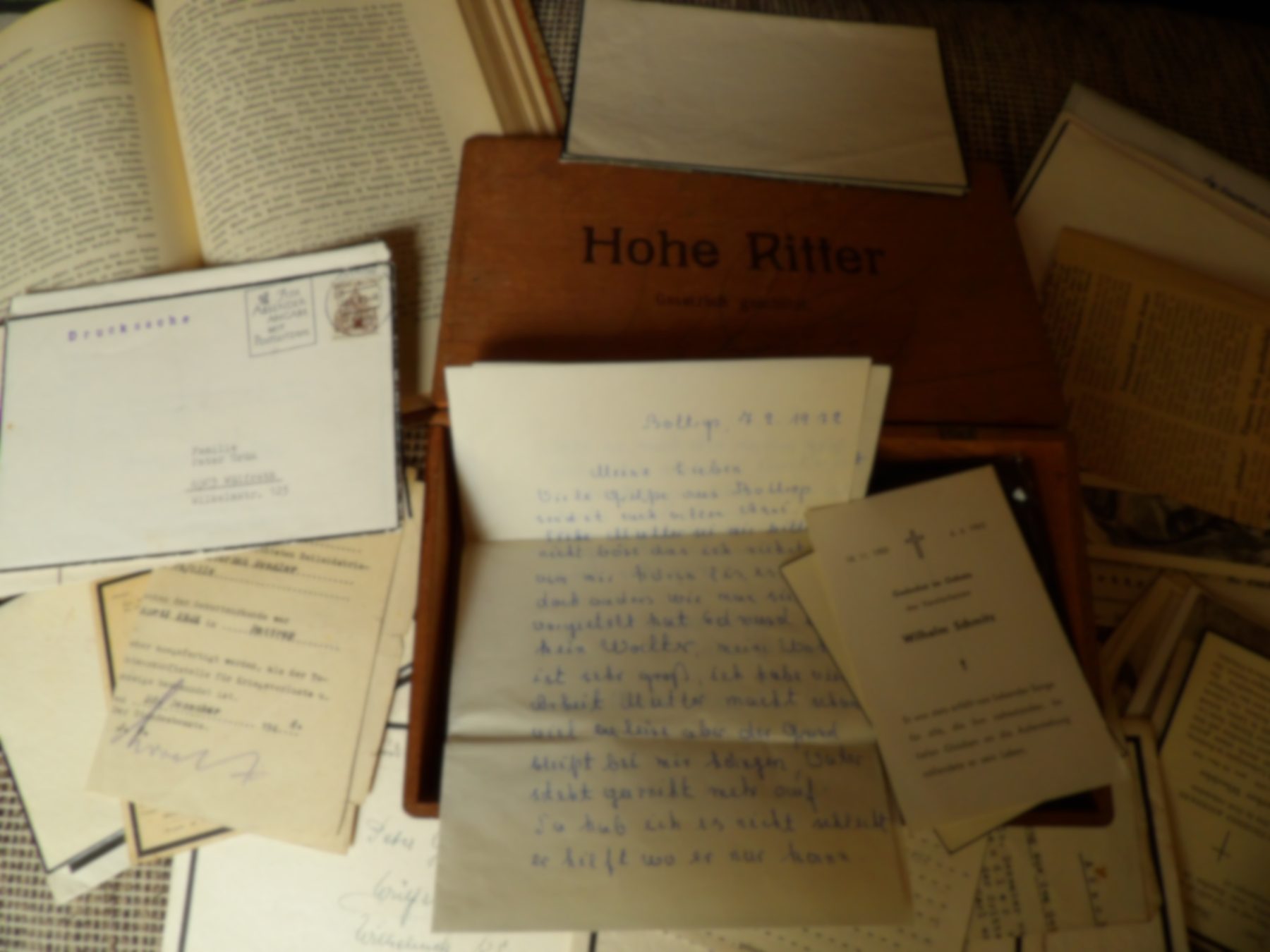
The wall you’ve hit
At a German village name. At a record written in an alphabet you cannot read. At an archive that does not answer email in English. This is where I begin.
I read Kurrent, Sütterlin and the Latin of Catholic parish registers; I know which record survives where — on Matricula, on Archion, or only on a shelf in Duisburg, Münster, Detmold or Koblenz; and I visit those archives in person for what was never digitised. Seeing a record online is not the same as being able to read it. That difference is my work.
What I do
i.
Transcription and translation of old German documents — Kurrent, Sütterlin and early-modern hands, and Latin parish entries — rendered into clear, modern English.
ii.
German ancestry and problem-focused research from primary sources, with full source criticism: lineages, ancestor charts, and the resolution of contradictory or missing evidence.
iii.
Research and certified records to establish and document a German line of descent in support of a citizenship application.
iv.
Your findings prepared not as a stack of documents but as a documented narrative — as a report, an online publication, or a printed book your descendants will still want to open.
v.
Systematic searches and record retrieval in state, church, municipal and parish archives across North Rhine-Westphalia and beyond, fully documented — including material that exists nowhere online.
An example of my work
A man married near Essen in 1841 giving parents who, it turned out, had never existed — an invention to hide an illegitimate birth. His baptism named only his mother; the trail seemed to end there.
It reopened in the civil duplicate of an elder sibling’s birth, where the father had acknowledged himself by name and birthplace — and it closed, after research in the parish books of a village more than 150 kilometres away, on a single man who could not be confused with any other, despite an age that at first seemed impossible.
This is what I mean by a documented narrative: not a name added to a chart, but a conclusion argued from the sources — and honest about what remains open.
About
My name is Klaus Mendler. I read history, German studies and philosophy at the Freie Universität Berlin (M.A.) and have worked as an independent genealogist and historian from Krefeld since 2002. Over those years I have come to know the archives of the Rhineland and the wider former Prussian Rhine Province from the inside; I am listed on the referral roster of the Landesarchiv NRW — the list to which the archive directs enquirers whose questions exceed what its own staff can undertake.
For me, genealogy is not a collection of data points but a reading of traces. Every fragment of an entry, every priest’s marginal note, stands for a life. What I deliver is never just a list: it is a documented narrative, argued from sources — in English or German.
How it works
1.
Send me the names, places and dates you already have, and what you hope to find.
2.
I will tell you what can realistically be done, and what it is likely to involve.
3.
Online across the German portals, and on site in the archives for what is not digitised.
4.
A sourced report — and, if you wish, a written family history.
Contact
A first enquiry is free of obligation. Tell me what you already know and what you would like to find out, and you will receive an honest assessment of what can reasonably be done. I work with clients in Germany and abroad, in English or German.
Terms of engagement
The full version is available on request.